
The Shingwauk Residential School was part of a larger system in Canada that separated Indigenous children from their families, cultures, and identities. While it may seem like a distant part of history, its impact is still felt today by survivors, their children, and future generations.
Located in Sault Ste. Marie, Ontario, Shingwauk was one of many residential schools created under government and church authority. Understanding what happened there is essential to understanding the ongoing journey of healing and reconciliation.
You can learn more about this work through the Children of Shingwauk Alumni Association, which continues to support survivors and preserve this history.
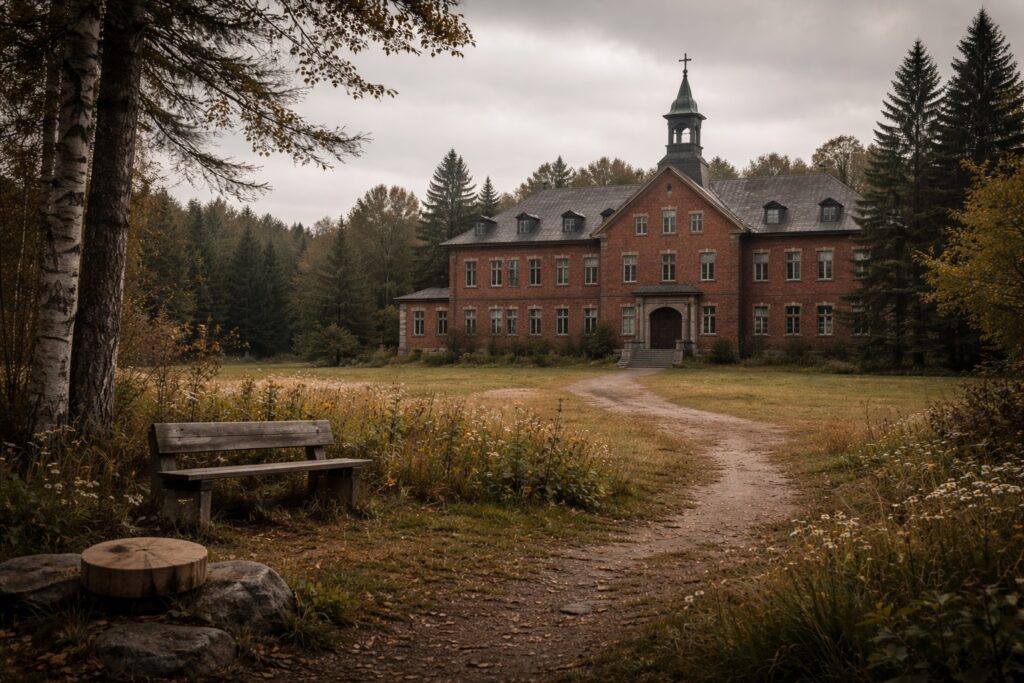
What Was the Shingwauk Residential School?
The Shingwauk Residential School was a government-funded, church-operated institution designed for Indigenous children. It operated from the 1870s until 1970, making it one of the longest-running residential schools in Canada.
Children from First Nations, Métis, and Inuit communities were taken—often far from home—and placed in the school. The purpose was not simply education. The goal was assimilation: to replace Indigenous identity with European-Canadian ways of life.
At its core, Shingwauk was part of a system that:
- Removed children from their families
- Suppressed language and culture
- Replaced traditional teachings with Western values
While it was presented as a place of learning, its structure and policies caused deep harm that extended far beyond the classroom.
Where Was Shingwauk Located and Why There?
Shingwauk was located in Sault Ste. Marie, Ontario, on the traditional lands of the Anishinaabe and Métis peoples.
The location was not accidental. Residential schools were often built away from Indigenous communities to make it harder for children to maintain connections with their families and cultures.
Over time, children were brought to Shingwauk from across Ontario and even other parts of Canada.
Today, the site is home to Algoma University and the Shingwauk Residential Schools Centre, which work alongside organizations like CSAA to support education, healing, and awareness.
The Original Vision vs Reality
Chief Shingwauk’s Vision
The school was named after Chief Shingwaukonse, an Anishinaabe leader who had a very different vision for education.
He believed in what he called a “teaching wigwam”—a place where Indigenous youth could learn new skills while still maintaining their culture and identity.
His goal was balance, not replacement.
What Actually Happened
The reality was very different.
The system that developed under government and church control focused on assimilation. Instead of supporting Indigenous identity, it worked to remove it.
Children were:
- Discouraged or punished for speaking their language
- Separated from cultural practices
- Taught to reject their identity
This shift from vision to reality is one of the most important parts of understanding Shingwauk’s history.
What Was Daily Life Like at Shingwauk?
Daily life at Shingwauk was highly structured and controlled.
Strict Rules and Structure
Children followed strict schedules and were often separated by age and gender. Discipline was enforced, and personal freedom was limited.
Education and Labour
Shingwauk followed an “industrial school” model. This meant children split their time between classroom learning and manual labour.
Typical daily activities included:
- Half-day classroom instruction
- Half-day labour such as farming, cleaning, or maintenance
This approach limited academic growth and focused more on preparing children for manual work.
Separation from Family
One of the most painful aspects was separation from family.
Children:
- Could rarely visit home
- Had limited communication with parents
- Grew up without consistent family support
This separation had lasting emotional effects that continue to influence families today.
Cultural Suppression and Identity Loss
Cultural suppression was a central part of the residential school system.
At Shingwauk, children were expected to abandon their languages, traditions, and spiritual practices.
This had lasting consequences:
- Loss of language across generations
- Disconnection from cultural identity
- Confusion about belonging and self-worth
For many families, this loss is still being addressed today through cultural revitalization and education.
To explore more about this legacy, visit: https://childrenofshingwauk.ca/shingwauk-history/
The Impact on Survivors
The effects of Shingwauk did not end when students left the school.
Many survivors carried:
- Emotional trauma
- Grief and loss
- Difficulty forming relationships
Some also lost the opportunity to learn parenting skills within a family environment, which affected how they later raised their own children.
These impacts are often described as intergenerational trauma—where the effects of one generation’s experiences influence the next.
The presence of memorials and burial sites at the school grounds is a powerful reminder of the lives affected.
What Happened After the School Closed?
The Shingwauk Residential School officially closed in 1970.
After closure:
- Survivors returned to communities without support systems
- Many struggled with identity and reintegration
- The broader impacts remained largely unacknowledged for years
In 1971, Algoma University moved onto the site, transforming it into a place of education.
Over time, the site evolved into a space for both learning and healing.
The Legacy of Shingwauk Today
Today, Shingwauk is recognized as a National Historic Site of Canada.
Its legacy is complex. It represents both:
- A painful history of forced assimilation
- An ongoing effort toward truth, education, and reconciliation
Organizations, educators, and survivors continue to share stories and create spaces for dialogue.
The site now supports:
- Educational programs
- Archival research
- Community gatherings
This shift reflects a broader movement toward reclaiming history and restoring cultural identity.
The Role of the Children of Shingwauk Alumni Association
The Children of Shingwauk Alumni Association plays a key role in this ongoing work.
Through their efforts, they:
- Support survivors and their families
- Preserve historical records and stories
- Promote healing and community connection
- You can explore their work here: https://childrenofshingwauk.ca/
And read personal experiences here: https://childrenofshingwauk.ca/survivor-stories/
Their work ensures that the history of Shingwauk is not forgotten—and that it is shared in a respectful, truthful way.
Why Learning This History Matters
Understanding Shingwauk is not just about the past. It is about recognizing how that past continues to shape the present.
Learning this history helps:
- Build awareness and empathy
- Challenge misinformation
- Support meaningful reconciliation
For many Canadians, this is still a learning process. But it is an important one.
Conclusion: Remembering and Moving Forward
The Shingwauk Residential School is more than a historical site. It is part of a living story—one that continues through families, communities, and organizations working toward healing.
While the school represents harm and loss, it also represents resilience.
Today, survivors and their descendants are reclaiming their stories, rebuilding connections, and creating a path forward.
By learning about Shingwauk, you are taking part in that journey.